Wednesday, October 24, 2012

Iraq to receive heavy recovery vehicles


YORK, Pa., Oct. 8 (UPI) -- BAE Systems has received a U.S. Foreign Military Sales contract to build heavy equipment recovery vehicles for the Iraqi army.
The award for eight M88A2 Heavy Equipment Recovery Combat Utility Lift Evacuation Systems, which can haul 70-ton combat vehicles, is worth$31.8 million.
The M88A2 Hercules features improved power-assisted braking to enable the recovery vehicle to tow an M1A1 tank; increased horsepower; an improved electrical system and an enhanced hydraulic system.
"BAE Systems is answering the need for a cost-effective, self-supporting, heavy recovery performance vehicle," said mark signorelli vice president and general manager of Vehicle Systems at BAE Systems.
"Hercules will provide the Iraqi military with a recovery vehicle that has been tested and proven to tow and hoist today's heaviest combat vehicles."
Work on the contract will be performed at BAE's facilities in York, Pa., and Aiken, S.C. It is expected to begin in late 2013 and be completed in the middle of the following year.
Eight M88A2s were produced for the Iraqi army by BAE Systems in 2010.


KA-32 Diproduksi Di China


Beijing will begin the production of Russian multipurpose Ka-32 helicopters, Chinese media say. This aircraft has long been a pride of the national aviation industry. It is often used for solve specific problems under extreme conditions. Spokespeople for the Russian Helicopters confirmed the fact of negotiations with China on the subject.

Ka-32A11BC is a modernization of the multipurpose helicopter Ka-32, which is used for transporting people and cargoes, as well as for construction works, loading and unloading vessels. The chopper can also be used in the forest industry. The aircraft of this type are used in fire fighting, search, rescue and patrol operations.

Noteworthy, the aircraft is based on the technological platform used for the Russian military helicopter for the Navy, as the Ka-32 is a civil version of the military anti-submarine deck-based Ka-27PL helicopter. The forerunner of the Ka-32 was the Ka-22 rotorcraft, which, the USSR declined to develop after two air crashes.

According to Chinese publication People's Daily, the first major project for the production of Russian helicopters in China will kick off in Beijing. The sides implement four programs within the scope of the project: airport expansion, sales, service and training of crew.

The main manufacturer of helicopters of this type is JSC Kumertau Aircraft Production Enterprise. Spokespeople for holding company Russian Helicopters deny the existence of agreements to open a factory to assemble Ka-32 helicopters in China. Likewise, the Chinese do not say that they are going to build the Russian helicopters already tomorrow. The construction period will take about two years, the amount of investments - 4 billion yuan. According to estimates of the business community, the company's turnover in five years will make up 65 billion yuan a year.

In early September, at ILA-2012 air show in Berlin, General Director of Russian Helicopters Holding, Dmitry Petrov, said that the holding was studying the possibility to organize the licensed assembly of helicopters in China. "If we, together with our Chinese partners, come to believe that assembling a model in the People's Republic of China will be more profitable than export shipments, then we will start working on the organization of the assembly production there." The official stressed out that it was more profitable for companies to create their own assembly lines at the order of not less than 50 medium-class helicopters.

According to the Chinese publication, the first phase of the project will produce 30 large helicopters. The annual production output will make up about 30 billion yuan. At the same time, the project includes the establishment of structures for design, research and development works.

During five or seven years, the Chinese intend to fully master the technology and localize the production of parts on the level of more than 60 percent. The delivery of the license for the production of the aircraft is a common condition of the Chinese Government to enter the Chinese market.

The Ka-32A11BC is the only Russian helicopter that was certified by the European Aviation Safety Agency (EASA) in 2009. The aircraft is certified in North and South Americas as well as in Asia. Technically, it can be sold in the markets of most countries of the world. It is also the most popular model of Kamov Design Bureau abroad. There were large deliveries made to South Korea, where the fleet of Ka-32 exceeds 60 aircraft. There were more than 140 aircraft built in total, which operate in more than 30 countries worldwide.

Thus, Russian Helicopters may help China establish the production of one of its best aircraft to enter the market with this model. According to the recently published new edition of the state program for the development of domestic aircraft industry, Russia's share on the market of helicopters in 2025 is expected to make up 13.9 percent in civil and 15 percent in the military segment. In 2010, the index was 6 and 12 percent, respectively. The previous version of the program had the goal to increase the share of Russia in the civil helicopter market to 27 percent. According to Russian Helicopters, the share of the enterprise on the world market in 2011 made up 14 percent in money terms.

"In any case, any manufacturer considers expansion in the global or regional markets as an important element of the development strategy. In this respect, Russia should not be a mere supplier of natural resources, but it should also export sophisticated high-tech equipment. In this regard, our helicopter industry that has a powerful holding to effectively promote its products on the world market, has chosen the right strategy. Today the market is getting globalized, and one must be present in all segments. The holding produces quite competitive products and in this respect one should do everything to try various forms of cooperation and conquer new markets," chief editor of National Defense Journal, Igor Korotchenko believes.

During the APEC summit, President Vladimir Putin also spoke about the cooperation with Chinese partners in the field of aviation in two directions. "The first one is the creation of a large state-of-the-art helicopter on the basis of a Russian helicopter," he said. The second direction is the development of a wide-body aircraft, Putin added.

Not that long ago, it was reported that the talks between the United Aircraft Corporation (UAC) and the Chinese state-run concern Comac about the creation of a joint venture to develop a new long-range wide-body aircraft on the basis of IL-96 were close to completion.

In 2011, Russia launched the budget funding of the program of the high-speed helicopter. The range of the aircraft will make up 1,500 kilometers, whereas the cruising speed will reach 450 miles per hour. Russian Helicopters was also developing Mi-X1 and Ka-92 choppers, hoping to get the funding from the federal budget on the base of 50x50 scheme. In 2011, the federal budget allocated 400 million rubles for the project, and in 2012 - 700 million rubles.

It was planned that the first experimental models would appear from 2015 to 2017. The deadline was then pushed back to 2018.

Vitaly Salnik

Pravda.Ru
http://english.pravda.ru/russia/econ...pters_china-0/

Australia's first F-35 nears assembly milestone


Production activities on Australia's first F-35 Joint Strike Fighter will make a significant advance early next month, according to a Lockheed Martin programme official.
Speaking to Flightglobal in London on 17 October, vice-president F-35 programme integration and business development Steve O'Bryan said the first part of the aircraft's centre fuselage is due to be loaded into a jig at Northrop Grumman's Palmdale site in California on 1 November.
The conventional take-off and landing F-35A is one of two Australian aircraft contained within Lockheed's sixth low-rate initial production contract, which covers deliveries in 2014.
 
Commonwealth of Australia
Canberra has so far funded the acquisition of two F-35s to support initial ground and aircrew training activities to be performed in the USA. It could eventually buy up to 100 production examples for the Royal Australian Air Force, with the stealthy type (pictured above in model form at the 2009 Avalon air show) to replace its legacy Boeing F/A-18A/B Hornets.
An Australian decision on whether to order its next planned batch of 12 aircraft is due to be taken in 2014 or 2015, with this having been deferred from an original date during 2012 in a bid to save costs associated with the programme.

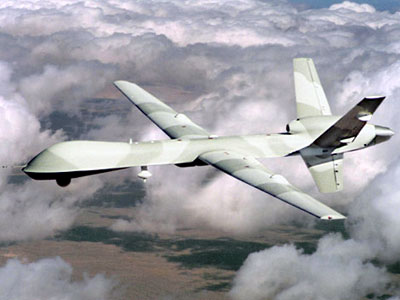
Yemen Air Force, Raven, T-Hawk and Predator UAVs


The Yemeni Air Force (YAF) is said to be working on a plan to buy unmanned aerial vehicles (UAVs) to reinforce the counter-terrorism activities across the country. The following 368-word report sheds light on the subject and tells what about the negotiations with the Pentagon on a project to buy Predator UAVs. It also tells what about the AeroVironment RQ-11B Raven and the Honeywell T-Hawk.

http://www.tacticalreport.com/view_n...ator_UAVs/2956

CONVERTING YAK-130 INTO A LIGHT ATTACK AIRCRAFT


Converting YAK-130 into a Light Attack Aircraft
According to a company spokesperson of the JSC IRKUT Corporation ”Yak-130 New generation Combat Trainer provides top-class pilots training to handle Russian and foreign-made combat aircraft of the “4+” and “5” generations.
Currently IRKUT Corp. is working on improvements to Yakovlev Yak-130 combat jet trainer that may turn it into a light attack aircraft. The first stage of modernization includes the installation of an inflight refueling system and optronic pod. In the next stage, designers plan to equip the aircraft with radar. The radar installation will provide the Yak-130 with target detection for air-to-ground missiles.
Russian Defence Minister Anatoly Serdyukov, who was recently in Delhi, said, “Equipping the Air Force with Yak-130 aircraft allow achieving a desired level of pilot’s trainings to handle new generation combat fighters, which are to be mass procured by the Military Department.”


Source : SPAviation

First LHD hull delivered to Australia


MV Blue Marlin arrives in Port Phillip Bay with HMAS CANBERRA.The Canberra class vessels are 230.8 metres long overall, with a maximum beam of 32 metres, and a maximum draught of 7.18 metres.The hull of the first of the Royal Australian Navy's two new amphibious ships, HMAS Canberra, transited through Port Phillip Heads and was greeted by the men and women of HMAS Cerberus on 17 October 2012.
The hull of the first of the Royal Australian Navy's two new amphibious ships, HMAS Canberra, transited through Port Phillip Heads and was greeted by the men and women of HMAS Cerberus on 17 October 2012.
The Canberra class vessels are 230.8 metres long overall, with a maximum beam of 32 metres, and a maximum draught of 7.18 metres.
At full load, Canberra will displace 27,851 tonnes, making the new LHDs the largest ships to serve in the RAN.
HMAS Canberra will be accepted into service in 2014, followed by her sister ship HMAS Adelaide (LHD02) the year after.


LinkWithin

Related Posts Plugin for WordPress, Blogger...